
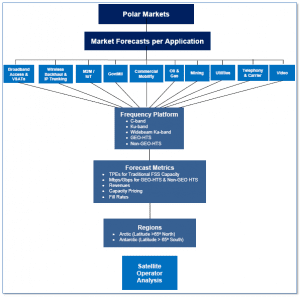
A new report from NSR predicts more than $1.7 billion in revenue growth generated by the Arctic and Antarctic regions across a range of applications and frequency bands.
A new report from Northern Sky Research (NSR), Polar Satellite Markets, 2ndEdition, shows more than $1.7 billion in revenue growth generated by the Arctic and Antarctic regions across a range of applications and frequency bands, driven by new bandwidth and capacity opportunities. Maritime demand will drive the growth of this nascent market, resulting in a twelve-fold increase of commercial mobility capacity revenues alone between 2015-2025, albeit from a low base.
“While the polar regions are a niche market in and of themselves, the latent demand, lack of competition, and great need for connectivity combined presents favorable opportunities to those who are willing to accept the higher risks and technical challenges of operating in the region,” noted Alan Crisp, NSR senior analyst and report lead author. “Despite the challenges, such as small populations and lack of telecomm infrastructure, there are certainly opportunities for growth.”
High Throughput Satellites (HTS) will be the largest winners, bringing new revenue opportunities to these unconnected and under-connected markets, with the region seeing $116 million in HTS revenues by 2025. Latent demand for this greater bandwidth will drive revenue growth when GEO-HTS and LEO-HTS solutions become available to Arctic residents and enterprises alike.
