
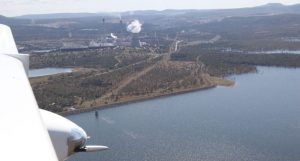
 A 15-year study by researchers in South Australia and Germany mapped the source, journey and effect of ultrafine particles in the lower troposphere. It found that filtration systems on modern coal-fired power stations are the biggest individual source of ultrafine particles (UFPs), ahead of urban road traffic.
Results were gathered using ultralight research trikes and other small aircraft around the world, including Mongolia, Germany, Mexico, China and Australia. The flying laboratories are equipped with highly sensitive instruments and sensors measuring dust particles, trace gases, temperature, humidity, wind and energy balances. The research aircraft followed the ultrafine particles for more than 1,000 kilometers and could still identify from which power plant they originated.
The paper, published in the Bulletin of the American Meteorological Society, identifies ultrafine particles as particles smaller than 100 nanometers. Although the pollution isn’t visible to the naked eye, and they don’t generate haze and are difficult to detect with optical equipment, these particles have been previously linked to respiratory issues.
The new research also links the ultrafine particles to weather disruptions such as a lack of rainfall near the power stations and increased rain intensity in pockets further away.
The study was led by Professor Jorg Hacker from the Adelaide-based Airborne Research Australia, which is affiliated with Flinders University in South Australia, and Professor Wolfgang Junkermann from the Karlsruhe Institute of Technology (KIT) in Germany.
When emitted, the miniscule particles could travel hundreds of kilometers and grow by coagulation and chemical processes. According to Hacker, the ultrafine particles grew to sizes of about 40 nanometers after two to three hours of travel and became additional cloud condensation nuclei, which then leads to a much larger number of small cloud droplets to form than from natural processes.
Photo Credit: Jorg Hacker
